

Avoiding decision fatigue when choosing evaluation methods

We are often asked about the best method to use for an evaluation.  But there is a bewildering array of evaluation methods. For example, this is the list of evaluation methods on Wikipedia.

Some are methods for collecting data.  Some are methods for understanding whether the intervention has caused the impacts that have been observed. Methods for synthesizing data. Methods for reporting findings.

This can be an overwhelming set of choices.

In the BetterEvaluation project we have identified which evaluation methods can be used for different evaluation tasks, and grouped these evaluation tasks into 7 components. This makes it easier to plan an evaluation, because it breaks the planning process into a number of distinct decisions, each with a smaller number of method options.

We are currently working on the closed beta version of the BetterEvaluation site, developing guidance on when to choose and how to use well these different methods. Information about methods comes from experts, users, events, Research and Development projects and existing documentation (including websites and evaluation guides).

In the meantime, you can find information about components, tasks and methods on this site.  Start at the overview of components, or choose the COMPONENTS menu for information about each of the 7 components, and some specific tasks and methods.

InterAction Guidance Note – Introduction to Impact Evaluation

We are collaborating with InterAction to present a webinar on ‘Introduction to Impact Evaluation’, drawing on material from the BetterEvaluation project.  This is the first of a four-part series of guidance notes and webinars on impact evaluation that  InterAction is developing with financial support from the Rockefeller Foundation.

The webinar will run 4-5pm EST Monday 12th March 2012, and will be made available, together with the guidance note, on the InterAction site.

BetterEvaluation at the AfrEA conference in Ghana

This week we are at the African Evaluation conference in Accra.

The theme of the conference is ‘Rights and Responsibilities’. Today at 4pm in room ER1 we will present a panel session on how the BetterEvaluation project can help us meet our responsibilities to ensure that the right combination of methods are chosen for evaluation and implemented well – and address the question of who has the right to make the decisions about evaluation methods.

As well as providing an overview of the project and its classification system of different methods, the session will focus particularly on different methods and strategies for supporting decisions about the evaluation scope and design. Who gets to decide what will be evaluated and how?

We also have an exhibition space at the conference. Come and talk with us about choosing evaluation methods and sharing information about them.

You can also follow up on what we are doing on Twitter #bettereval.

Update on BetterEvaluation

The fully interactive site will go live at this URL by May 2012. We are grateful for financial support from: the Rockefeller Foundation, the International Fund for Agricultural Development, AusAID Office of Development Effectiveness and RMIT University.

The four founding partners – RMIT University, ODI, ILAC and PACT –  are developing the site in collaboration with a number of organizations, including MandE News, MyM&E, outcomemapping.careflectlearn.org, evaluationtoolbox.net.au, Climate-Eval, researchtoaction.org and SEA-Change.

Our timelines for going live have changed as the site is currently undergoing major changes to improve its accessibility, speed and comprehensiveness.   We want to make sure these changes are fully bedded down before we go live.  We will therefore undertake formal beta-testing and further development next year as we move from the current prototype to the fully functional site.

In the meantime, we will be progressively sharing resources here. We continue to welcome your feedback on them and suggestions for additional resources.

We will also continue to share material at evaluation events.  In 2011 we presented material at the InterAction Forum in Washington, DC, the South African Monitoring and Evaluation Association in Johannesburg, the Results-Based Management Community of Practice in Stockholm, the Food and Agriculture Organization in Rome, the Australasian Evaluation Society in Melbourne, and in an international webinar with SEA-Change.

In January 2012 we will be sharing resources from the BetterEvaluation project at the African Evaluation Association conference in Ghana.  We look forward to meeting some of you there.

Best wishes for the holidays and the New Year.

BetterEvaluation update November 2011

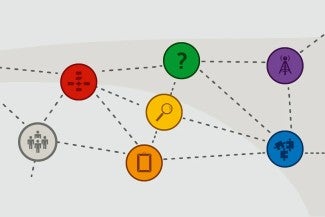
Here is a sneak peek of the latest version of our new home page. The new ‘rainbow’ graphic helps quick navigation to particular methods. It reinforces the message that good evaluation is not just about appropriate methods for collecting, synthesising and analyzing data, but also about other components, such as appropriate framing of the evaluation’s purpose, identifying intended users, clarification of the underpinning values, causal analysis, effective reporting and supporting use of the evaluation findings.

The site provides advice on choosing and using methods along with guides, examples and other resources to support users in selecting and using a suite of methods appropriate for a particular evaluation. The site is an interactive forum for seeking advice from experts, discussing evaluation challenges and sector related issues and respectfully sharing lessons learnt about what has worked well – and what hasn’t. The BetterEvaluation team is excited about going live, expanding the number of site members and hearing a diversity of views as people share their experiences, provide feedback on the site, participate in developing content and discuss hot topics.

Last week we were at the American Evaluation Association annual conference in Anaheim, CA. We presented a catalogue of methods, drawn from the website, for determining criteria and standards in evaluation (agreeing on what success looks like). We are keen to learn more about the strategies that are likely to be effective for the BetterEvaluation platform and during the presentation we explored what else is needed to support people to be able to appropriately choose and use methods from the catalogue.

BetterEvaluation at the SAMEA Conference

Patricia Rogers's Presentation at SAMEA

Patricia Rogers's Presentation at SAMEA

Prof. Patricia Rogers made a presentation about BetterEvaluation at the 3rd Biennial Conference of the South African Monitoring and Evaluation Association (SAMEA), http://www.samea.org.za/. The presentation attracted a large group of professional evaluators, who asked important questions about the quality of the content of BetterEvaluation, as well as how the site will be moderated. Patricia emphasized the importance of involving those with experience in a particular method who then become stewards of that method and are able to provide some quality control. The presentation ended with Patricia asking participants to submit a question about evaluation they would like to see addressed on BetterEvaluation.

BetterEvaluation booth at SAMEA

BetterEvaluation booth at SAMEA

Besides the formal sessions, Dr Patricia Rogers and Cristina Sette, members of the BetterEvaluation team, had a chance to interact closely with SAMEA participants who visited BetterEvaluation booth. Several challenges faced by evaluators in the field were collected and will be part of BetterEvaluation portfolio of FAQ. If you have a question related to evaluation and would like it addressed on BetterEvaluation, please email it to patricia.rogers(at)rmit.edu.au.

BetterEvaluation Update September 2011

BetterEvaluation is an international collaboration to improve evaluation practice and theory by sharing information about evaluation methods and approaches.

With support from the Rockefeller Foundation and IFAD (the International Fund for Agricultural Development), we are developing a website platform to help evaluators and evaluation managers choose the appropriate combination of evaluation methods and to use them well. Material on the site comes from user contributors, existing websites and guides, recognised evaluation experts, face to face and virtual events and Research and Development projects on evaluation methods.

Accessing the BetterEvaluation platform

We will be formally launching BetterEvaluation at the African Evaluation Association (AfrEA) conference in Accra, Ghana in January 2012. You can apply for pre-release access before the formal launch.

We are currently working with our beta-partners to implement changes to the site before making it available for pre-release access. We will be providing some sneak peeks of the new look site here, and also live at the South African Monitoring and Evaluation Association conference in Johannesburg this week.

What BetterEvaluation will do

  • Provide a framework to work through the process of choosing evaluation methods
  • Highlight useful methods that are less well documented
  • Draw on the experience and expertise of evaluators and evaluation users across the world
  • Partner with key institutions to develop sector specific content and provide cross-sectoral content

How you can become involved

  • A partner during the current beta-testing phase, contributing to the initial development of the site by suggesting or developing content and providing feedback on format and interface
  • A user or advocate for users, when it is available for public access, using the site or recommending it to grantees and partners
  • A content partner, providing guidance and expertise in particular methods, sectors or evaluation challenges and by linking the project to others working in those areas
  • A research and development partner, developing a research plan with us to develop, trial and document particular methods or to address particular challenges.
  • A sponsor, supporting site development or development of material for particular areas or people, core staffing or a particular event

To discuss how you would like to be involved please contact the Project Director,

Professor Patricia Rogers at patricia.rogers@rmit.edu.au or visit the BetterEvaluation booth at the SAMEA conference this week.

Founding partners: ILAC (Institutional Learning and Change Initiative of the Consultative Group on International Agricultural Research), ODI (Overseas Development Institute), Pact, RMIT University (Royal Melbourne Institute of Technology